If you have ever seen valerian root capsules on a pharmacy shelf or heard of a sleepy-time tea meant to help you drift off, you have already crossed paths with this plant, even if you never pictured what it actually looks like growing in a garden. The valerian plant is a tall, hardy perennial with clusters of sweetly scented flowers and a strong, documented history stretching back more than two thousand years. This guide covers what the plant actually looks like, how to tell it apart from a very differently related look-alike, how to grow it successfully, and why it earned such a lasting reputation in the first place.
What Is a Valerian Plant?
Valerian, botanically named Valeriana officinalis, is a herbaceous perennial in the Caprifoliaceae family, native to Europe and temperate parts of Asia, and now naturalized across much of North America. It is also widely known as garden valerian, garden heliotrope, or simply valerian herb.
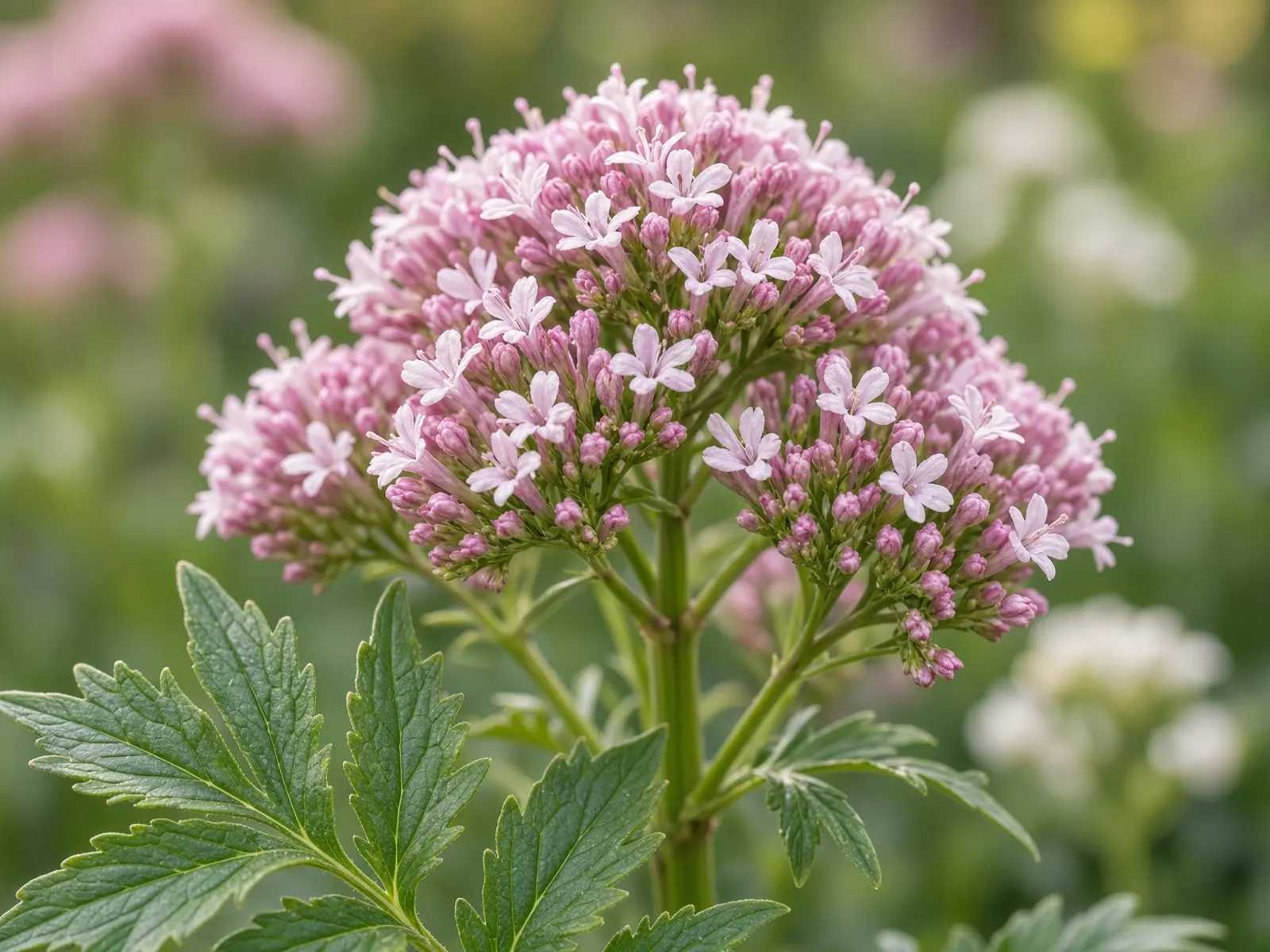
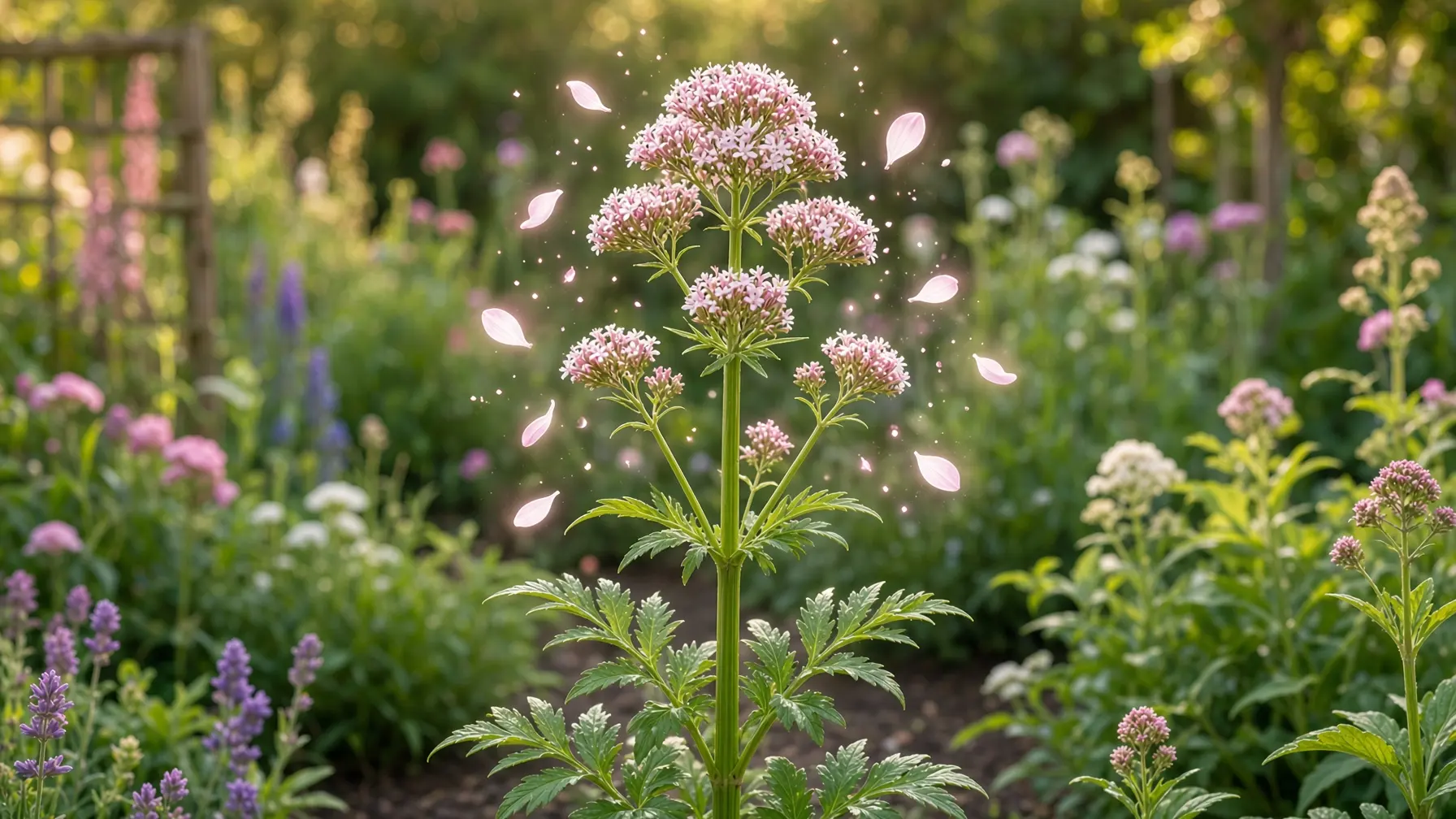
A mature plant typically reaches three to six feet tall, growing from a single hollow, ridged stem topped with clusters of small, pale pink to white flowers that bloom in early to midsummer. The scent is sweet and distinctive, often described as pleasant when fresh, which is a sharp contrast to the strong, somewhat unpleasant smell the roots develop once dried. The leaves grow in opposite pairs along the stem, divided into seven to ten pairs of narrow leaflets, giving the foliage a slightly feathery, celery-like appearance. Below ground, the plant forms a dense, fibrous root system attached to a short rhizome, which is the part most people associate with valerian once it has been dug, cleaned, and dried.
One detail that surprises a lot of first-time growers: only one flowering stalk generally emerges per root. If a clump appears to send up several stalks close together, it usually means several individual plants have established themselves side by side rather than one unusually vigorous specimen.
Historically, valerian has picked up a long list of common names, including all-heal, capon's tail, setwall, and devil's beard, most of which date back to medieval herbal traditions when the plant was credited with treating almost everything.
Valerian Plant vs. Red Valerian: Don't Confuse the Two
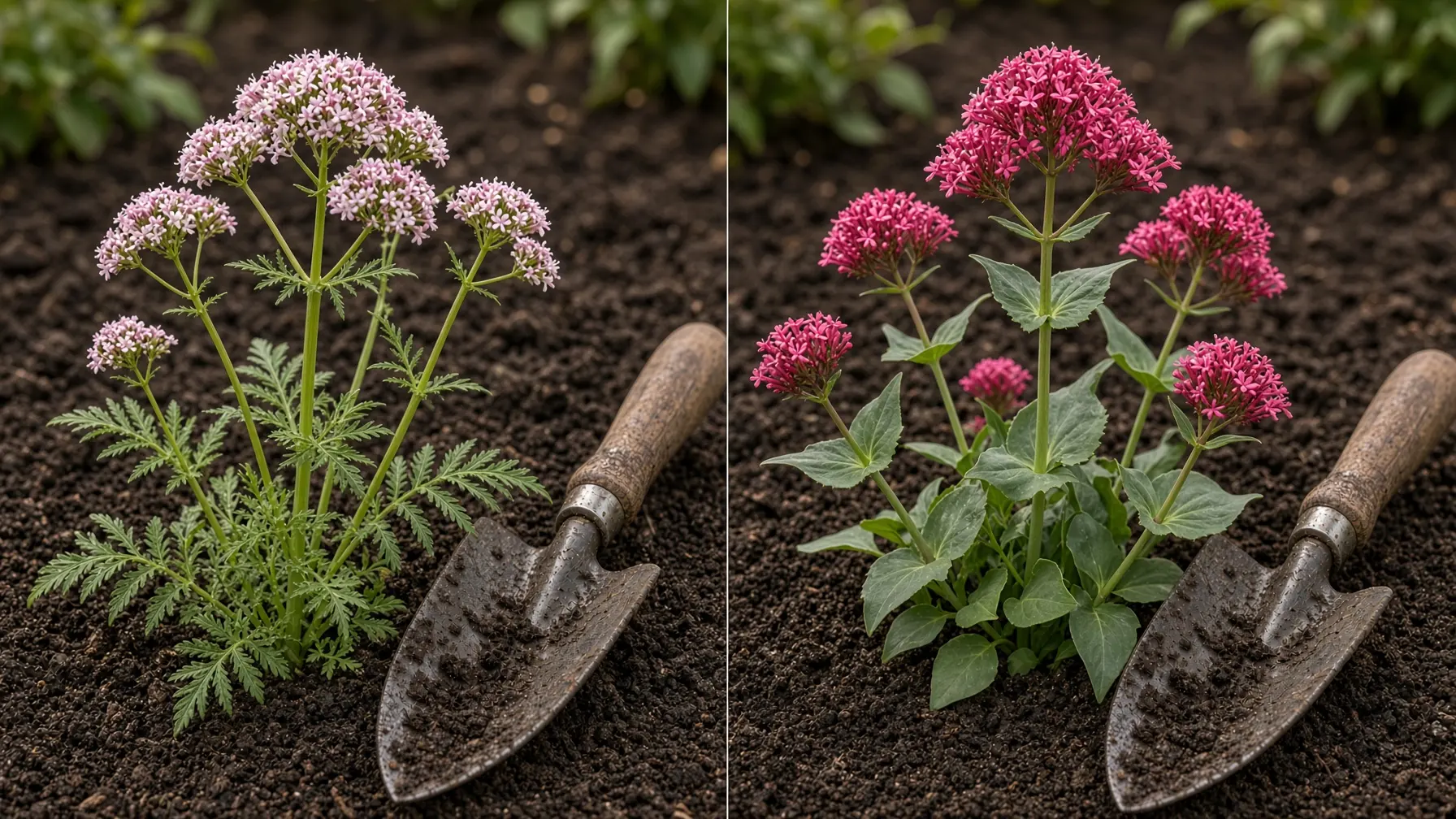
One of the most common mix-ups in identifying this plant involves a completely different species. Red valerian, botanically Centranthus, is a popular garden flower with clusters of pink or red blooms that often gets sold or labeled simply as "valerian" because of the shared common name. Despite the resemblance in name, it is not the same plant, does not belong to the same genus as true valerian, and is not the source of valerian root used in herbal preparations. If you are specifically looking for Valeriana officinalis, whether for its garden appeal or its traditional root use, always check the botanical name on the label rather than relying on the common name alone.
Valerian Plant Parts: Roots, Leaves, and Flowers
Each part of this herb has its own distinct look and role, which is worth understanding whether you are trying to identify the plant in the wild or simply curious what makes it up.
Valerian root is the part most closely tied to the plant's traditional reputation. It grows as a mass of pale, fibrous roots beneath a short central rhizome, and while it has little scent when fresh, it develops the plant's signature strong odor as it dries.
Valerian leaves are pinnately divided, meaning each leaf is made up of several narrow leaflet pairs branching off a central stem, usually seven to ten pairs per leaf. They grow in opposite pairs up the flowering stalk and have a soft, slightly toothed edge.
Valerian flowers appear in dense, rounded clusters at the top of the stem in early to midsummer. Individual blooms are small and tubular, typically white with a faint pink blush, though the intensity of that pink tint can vary noticeably from plant to plant, which is why you'll sometimes see the flowers described separately as white valerian or pink valerian depending on the specimen. The flower cluster's sweet fragrance is often strongest in the evening.
Common Names for the Valerian Plant
Because valerian has been cultivated and used for so long across so many regions, it has accumulated an unusually large collection of common names. Garden heliotrope and garden valerian are among the most frequently used today, largely to distinguish the cultivated herb from its wild relatives. Older texts refer to it as all-heal, a nod to its reputation as a cure for nearly every ailment imaginable, while capon's tail and setwall both appear in medieval English herbals. Devil's beard is a somewhat less common but still recognized nickname, likely tied to the plant's wild, slightly unkempt root mass. Regardless of which name you encounter, all of them refer back to the same plant, Valeriana officinalis, as long as red valerian is correctly ruled out.
Valerian is native to Europe and temperate regions of Asia, but it has spread and naturalized widely, and today it grows successfully across most of the United States and Canada as well. It is an extremely cold hardy perennial, generally thriving from USDA growing zone 4 and warmer, and it dies back to the ground each winter before re-emerging reliably in spring. In the wild, it favors damp meadows, ditches, and streambanks, which gives a good clue to what it prefers in a garden setting too: consistent moisture and room to spread.
How to Grow Valerian
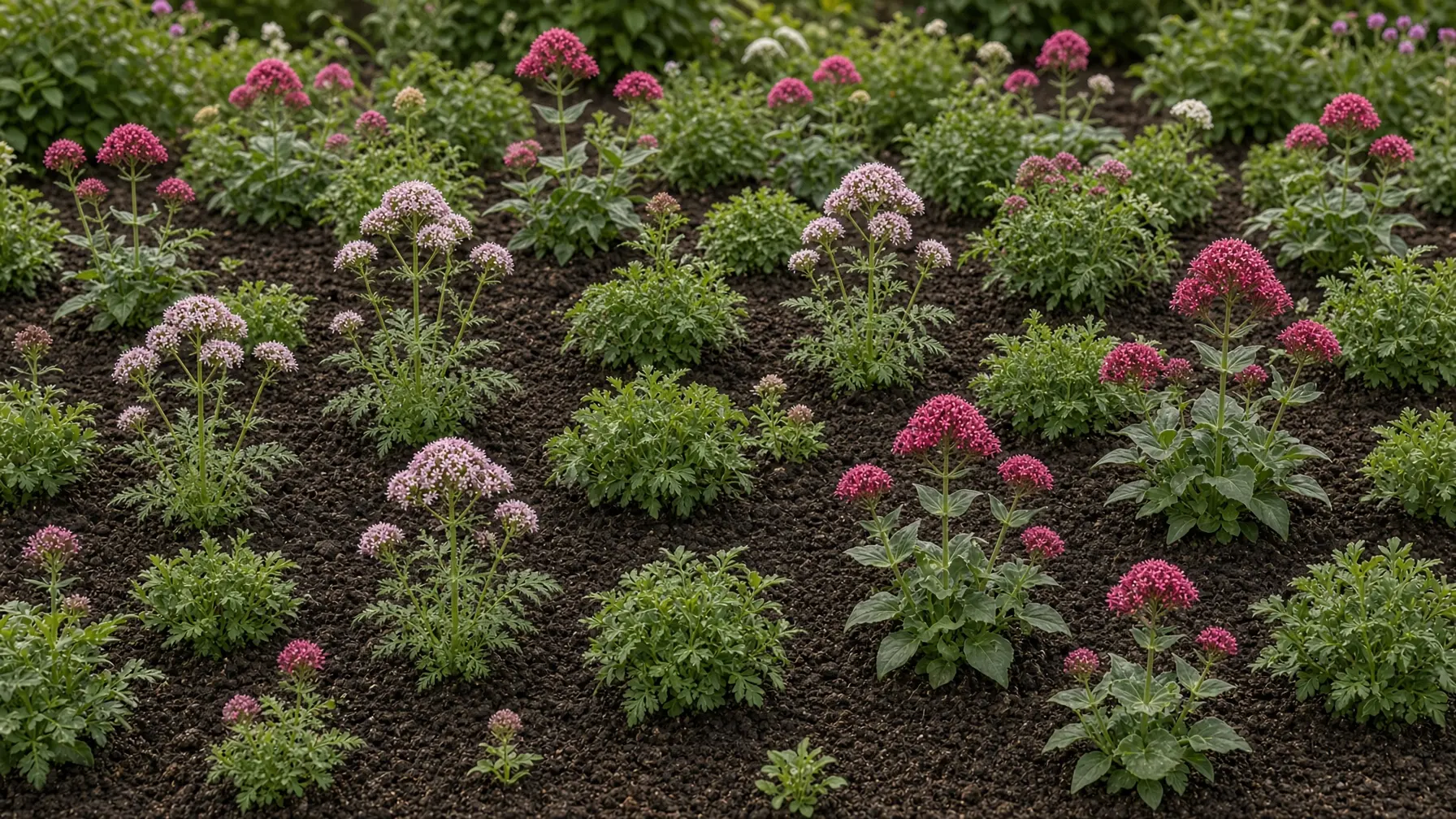
Growing valerian is genuinely low effort once it's established, which is part of why it has remained a staple in herb gardens for centuries.
Sunlight and Soil
Valerian grows best in full sun to partial afternoon shade, and it tolerates a wide range of soil types as long as drainage is reasonably good. It is not a fussy plant about soil fertility, and heavy feeding is generally not necessary.
Planting Valerian
You can start valerian from a purchased seedling, or start seeds indoors and transplant them outside two to four weeks before your last expected frost. Space plants roughly three feet apart in each direction, since a mature clump can spread to around eighteen inches wide within a couple of growing seasons, and the plant itself can tower over nearby low-growing herbs once it reaches full height.
Watering and General Care
Keep the soil consistently moist, particularly while the plant is establishing itself, though established valerian handles brief dry spells reasonably well. Feeding is rarely needed, and beyond the occasional pest like aphids or slugs, valerian is not prone to serious problems.
Controlling Its Spread
Left alone, valerian will happily reseed itself, and it can become mildly invasive in a garden bed if the flower heads are allowed to go to seed. Cutting back the flowering stems after bloom, or harvesting them for cut flowers, is the simplest way to keep a patch contained.
Propagating by Division
Once an established clump is a few years old, it can be lifted and divided in early spring or fall, much like many other herbaceous perennials. Simply dig up the root mass, split it into sections that each contain some healthy root and a growth point, and replant the divisions at the same spacing recommended for new plants. Division is often a faster route to a mature-looking patch than starting from seed, since seed-grown valerian typically takes a full season or two to reach flowering size.
Companion Planting
Valerian is often planted alongside low, mound-forming herbs and flowers, since its tall, airy flower stalks provide height at the back of a bed without shading out shorter neighbors. It also tends to attract beneficial pollinators, making it a reasonable addition near vegetable beds or other plants that benefit from extra pollinator traffic.
Where to Buy This Plant: Nurseries and Seed Sources
Valerian is widely available through herb nurseries, seed catalogs, and garden centers that carry perennial herbs, usually sold either as young potted seedlings or as seed packets labeled Valeriana officinalis. When shopping for a valerian plant for sale, it's worth double-checking that listing against the botanical name rather than the common name alone, since, as covered above, red valerian is sometimes marketed under a similar sounding name despite being an unrelated plant.
Harvesting Valerian Root
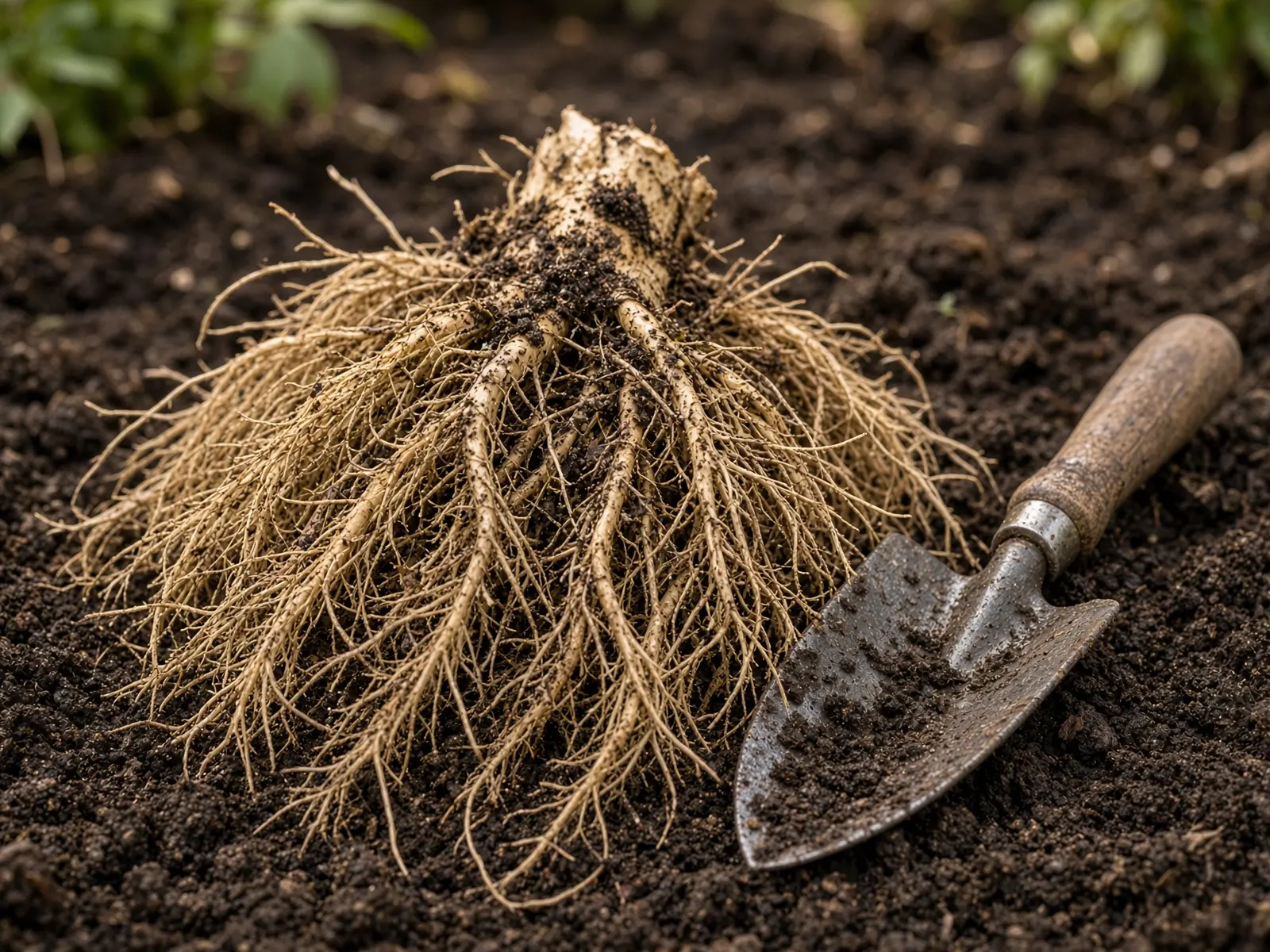
The root is the part of the plant most associated with valerian's traditional uses, and it takes patience to harvest properly. Roots are usually dug in fall or early spring, ideally once a plant has had at least a full year or two to establish a decent root system. Because the roots release a notably strong odor as they dry, most growers dry them outdoors or in a well-ventilated space away from living areas, then store the dried root in an airtight container once fully cured. We go into harvesting technique and root preparation in more depth in a dedicated guide, but the short version is: dig, clean, dry outdoors, and store away from moisture.
Why Is Valerian Famous? A Brief History
Few garden herbs carry a documented history as long as valerian's. Its use has been recorded for more than two thousand years, starting with figures like the Roman naturalist Pliny, who recommended it for pain relief, and the physician Dioscorides, who used it as a diuretic. Centuries later, the medieval abbess and healer Hildegard of Bingen used valerian as both a tranquilizer and a sleep aid, and by the medieval period it had earned the nickname "all-heal" for its reputation as a cure-all.
The herb's reputation continued well past the medieval period. The sixteenth century herbalist John Gerard wrote about valerian as a remedy for chest congestion, convulsions, and bruises, while the seventeenth century physician Nicholas Culpeper credited it with usefulness against the plague, along with more modest claims for treating coughs and wounds. That kind of sweeping, cure-everything reputation is exactly how an unassuming garden perennial ended up with a name like all-heal in the first place.
Valerian also shows up in folklore well beyond medicine. It has long been associated with an old legend claiming the Pied Piper of Hamelin carried valerian root in his pockets to lure rats out of the town, a story that has at least some grounding in fact: valerian genuinely has a strong, documented attraction for both rats and cats. The compounds responsible, including valeric and isovaleric acid, produce an effect on cats similar to catnip, often triggering rolling, rubbing, and generally excitable behavior around a bruised or disturbed plant. It's also why gardeners who grow valerian at home sometimes notice their cats taking a sudden, dedicated interest in one particular corner of the yard.
Frequently Asked Questions
Is the valerian plant the same thing as valerian root?
Yes, essentially. The plant itself is the whole living herb, while valerian root refers specifically to the dried root harvested from it, which is the part most commonly used in teas, tinctures, and supplements.
Can you take valerian while pregnant?
There is not enough reliable research confirming valerian's safety during pregnancy or breastfeeding, so it is generally recommended to avoid it during these times unless a doctor specifically advises otherwise. This is a good question to bring directly to a healthcare provider rather than deciding on your own.
Why does valerian root smell so bad?
The fresh plant and its flowers actually smell pleasant and sweet. It is only once the root is dried that it develops its notoriously strong, somewhat unpleasant odor, a well-documented quirk that even ancient Greek physicians commented on.
Do cats really react to valerian?
Yes. Valerian has a well-documented effect on cats similar to catnip, often making them roll around, rub against the plant, or become noticeably more playful when they encounter a bruised root or leaf.
Is valerian invasive in a home garden?
It can self-seed readily if the flowers are left to go to seed, but it is easy to manage by cutting back flowering stems before they mature, which keeps the plant well behaved in a typical garden bed.
Final Thoughts
The valerian plant is one of those rare herbs that manages to be both an easy, attractive garden perennial and a genuinely historic medicinal plant with thousands of years of recorded use behind it. Whether you are growing it for its fragrant summer flowers, planning to harvest and dry the root yourself, or simply wanted to understand the plant behind a familiar herbal remedy, knowing how to identify it correctly, tell it apart from red valerian, and give it the right growing conditions is really all it takes to succeed with this plant.